
12 Best Social Media Analytics Tools Every Marketer Needs in 2025
Discover the 12 best social media analytics tools for 2025 that help marketers track performance, measure ROI, and gain deep audience insights. Learn how tryCoM unifies Google and social analytics for smarter, data-driven decisions.
 Annamalai Kathir (AK)
TL;DR
- Social media analytics tools are essential because relying on intuition alone no longer works — marketers need data to understand what drives engagement, conversions, and brand growth across every channel.
- These tools collect and interpret performance metrics from Instagram, Facebook, LinkedIn, YouTube, TikTok, and X, helping teams track engagement, audience insights, ROI, and competitor benchmarks in one place.
- Native analytics like Instagram Insights or YouTube Studio offer surface-level metrics, while advanced third-party tools provide unified dashboards, multi-platform reporting, and deeper audience and campaign analysis.
- The leading analytics tools for 2025 — including Sprout Social, Hootsuite, Rival IQ, Brandwatch, and Socialinsider — specialize in areas such as social listening, competitor benchmarking, and trend analysis, helping brands make smarter, faster marketing decisions.
- tryCoM stands apart by integrating both social and Google ecosystem analytics (Google Ads, Analytics, and Business Profile), allowing marketers and agencies to connect social performance directly to traffic, conversions, and revenue.
- When selecting a tool, marketers should evaluate team size, platform coverage, reporting depth, and integration with CRMs or ad platforms to ensure measurable ROI and efficient client reporting.
- With the rise of AI-powered insights and predictive analytics in 2025, the right analytics platform (like tryCoM) transforms raw social data into strategic actions — showing not just what’s performing, but how every campaign contributes to growth and profitability.
Introduction
- In today’s digital era, success on social media no longer comes from creative instincts alone—it’s driven by data. Every like, comment, share, and view tells a story about your audience. That’s where social media analytics tools come in. These platforms transform raw engagement metrics into actionable insights, helping marketers understand what works, what doesn’t, and how to optimize content for maximum impact.
- Social media analytics tools are specialized software platforms that collect, measure, and analyze data from social media channels to help brands track performance, understand audience behavior, benchmark against competitors, and optimize their social media strategy through actionable insights and comprehensive reporting.
- While native analytics (like Instagram Insights or Twitter Analytics) give you surface-level data, dedicated tools deliver deeper performance tracking, competitor analysis, sentiment monitoring, and ROI calculation across multiple platforms in one unified dashboard.
- In this blog, we’ll compare the 12 best social media analytics tools for 2025—covering their key features, ideal use cases, and pricing. Whether you’re managing a personal brand, running an agency, or leading enterprise-level campaigns, this guide will help you identify the right tool to turn social data into marketing intelligence.
What is social media analytics?
Social media analytics refers to the process of collecting, analyzing, and interpreting data from social media platforms to understand audience behavior, content performance, and brand perception. It helps marketers make data-driven decisions by tracking metrics like engagement rate, reach, impressions, and conversions to evaluate the effectiveness of their social strategies.
What Are Social Media Analytics Tools?
Social media analytics tools are digital platforms designed to help marketers collect, interpret, and act on data from social media networks. These tools consolidate performance metrics across multiple channels—Instagram, Facebook, LinkedIn, YouTube, X (formerly Twitter), TikTok, and more—so teams can measure engagement, audience growth, and campaign success in one place.
Unlike basic platform analytics, these tools go beyond likes and impressions. They reveal how users interact with content, what drives engagement, and how those interactions correlate with business goals such as lead generation or sales.
Core Functions of Social Media Analytics Tools
At their core, analytics platforms provide five major functions:
- Performance Tracking: Measure reach, impressions, engagement rate, follower growth, and click-through rates. Example: Track engagement rate by dividing total interactions by total followers.
- Audience Insights: Understand demographics (age, gender, location), interests, and activity patterns.
- Competitor Benchmarking: Compare your performance against key competitors to spot gaps and trends.
- Content Analysis: Identify which posts, formats, and times yield the best results.
- ROI Tracking: Measure conversions and correlate social activity with sales or leads to determine social media ROI.
These metrics help marketers move from assumption-based to evidence-based strategy.
Social Media Analytics Tools vs Native Platform Insights
While native analytics (like Instagram Insights, LinkedIn Analytics, or YouTube Studio) are free and useful, they come with limitations. They often show only surface-level metrics, lack historical depth, and cannot combine data across multiple platforms.
Marketers using tryCoM can already access these native insights directly from one consolidated dashboard — no need to log in to each platform separately.
| Feature | Native Analytics | Third-Party Analytics Tools |
|---|---|---|
| Multi-platform tracking | ❌ No | ✅ Yes |
| Competitor benchmarking | ❌ Limited | ✅ Extensive |
| Automated reporting | ❌ Manual | ✅ Yes |
| Data visualization | ⚠ Basic charts | ✅ Custom dashboards |
| ROI tracking | ❌ Minimal | ✅ Advanced integrations |
Unified social media analytics tools allow marketers to evaluate all platforms side-by-side—saving time and providing strategic clarity.
For instance, tryCoM bridges the gap between native analytics and advanced insights by combining data from Facebook Insights, Instagram Insights, and Google platforms into one dashboard — letting marketers see how engagement translates into website sessions, conversions, and revenue.
Why social media analytics tools are essential for marketers
1. Gain Deep Insights into Audience Demographics and Behavior
Analytics tools uncover detailed insights about your audience—who they are, where they’re from, and how they engage. You can see when followers are most active, which post formats (reels, carousels, videos) they prefer, and what drives interaction. Metrics like audience retention, click-through rate, and follower growth help tailor content strategies that resonate more effectively.
2. Measure and Optimize Social Media ROI
Social media ROI is the most important indicator of effectiveness.
Analytics tools link engagement metrics with business outcomes—like leads, sign-ups, and purchases.
They track:
- Conversion rate
- Cost per acquisition (CPA)
- Return on ad spend (ROAS)
- Customer lifetime value (CLV)
By integrating with CRM or e-commerce systems, marketers can connect social performance directly to revenue.
ROI formula:
tryCoM directly integrates Google Ads and Google Analytics data, giving marketers a clear view of ad spend, conversions, and ROI — something few competitors provide natively.
3. Increase Follower Engagement and Customer Loyalty
Analytics platforms reveal engagement patterns—what posts spark discussions, which time slots yield more interactions, and which calls-to-action convert.
Using this data, marketers can:
- Identify top-performing content themes
- Optimize posting frequency
- Personalize content per segment
Improving engagement fosters community, loyalty, and long-term brand affinity.
4. Benchmark Performance Against Competitors
Competitive intelligence is a vital edge.
Tools like tryCoM, Rival IQ or Socialinsider allow you to track competitors’ content, posting frequency, engagement rates, and hashtag strategies.
By benchmarking, you can spot:
- Industry trends early
- Performance gaps
- Opportunities for differentiation
Benchmarking turns your competitors into teachers—revealing what works and where to innovate.
Key features to look for in Social Media Analytics Tools
1. Multi-Platform Support and Integration:
Choose tools that consolidate data from Instagram, Facebook, LinkedIn, YouTube, TikTok, Pinterest, and X.
tryCoM stands out here by connecting not only social platforms but also the full Google ecosystem — including Business Profile, Ads, and Analytics — enabling true 360° performance measurement.
Multi-platform support ensures you see the entire picture, not just isolated channels. Integration with Google Analytics, HubSpot, or CRMs enhances social media reporting and attribution accuracy.
2. Comprehensive Reporting and Visualization Options
Look for tools that provide:
- Custom dashboards
- White-label reports
- Automated report scheduling
- Visualizations (graphs, heatmaps, word clouds)
Reports like campaign performance, executive summaries, and competitor comparisons save time and enhance communication.
Its reporting suite even visualizes device-wise, geography-wise, and month-wise metrics, just like in tryCoM’s integrated dashboards.
3. Real-Time Monitoring and Alerts
Real-time tracking identifies spikes in mentions, engagement, or sentiment—helping brands act fast during viral moments or crises.
Features to look for:
- Brand mention alerts
- Hashtag performance tracking
- Sentiment detection
- Social listening for brand reputation
4. Scalability and Team Collaboration Features
For agencies and large teams, scalability is key. Tools offering multi-user seats, permission controls, shared workspaces, and client-specific dashboards ensure smooth collaboration. Platforms like tryCoM, Sprout Social and Hootsuite excel in multi-team environments, while simpler tools like Buffer Analyze fit smaller setups.
THE 12 BEST SOCIAL MEDIA ANALYTICS TOOLS FOR 2025
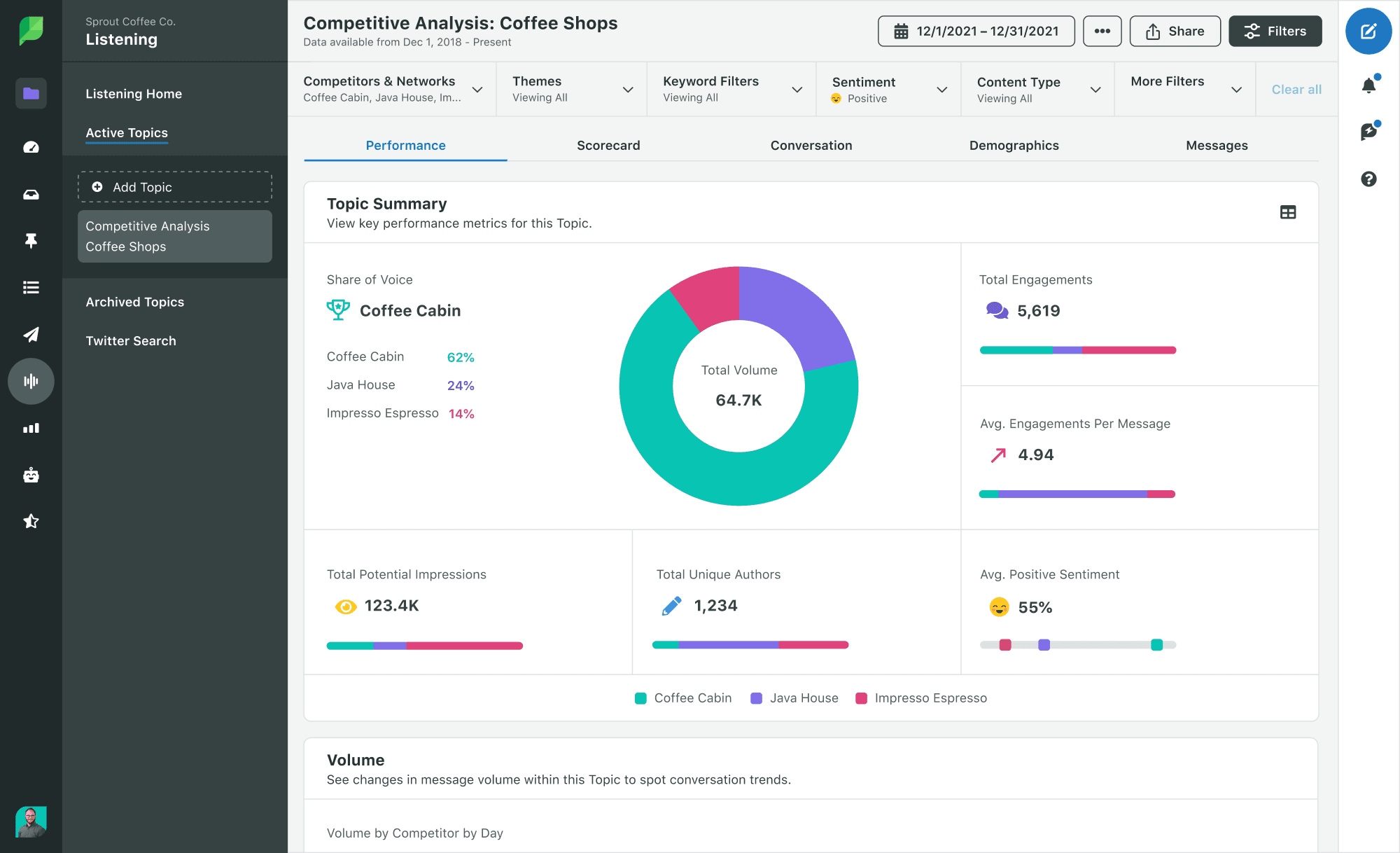
1. Sprout Social – Best All-in-One Platform for Enterprise Teams
- Key features: Unified inbox, customizable reports, AI-powered insights, and competitor benchmarking.
- Ideal for: Mid-to-large businesses and agencies managing multiple clients.
- Pros: Deep analytics, collaboration tools, sentiment analysis.
- Cons: Higher price tier for small teams.
However, tryCoM offers similar enterprise-level analytics and reporting flexibility at a more accessible cost.
2. Buffer Analyze – Best for Creators and Small Teams
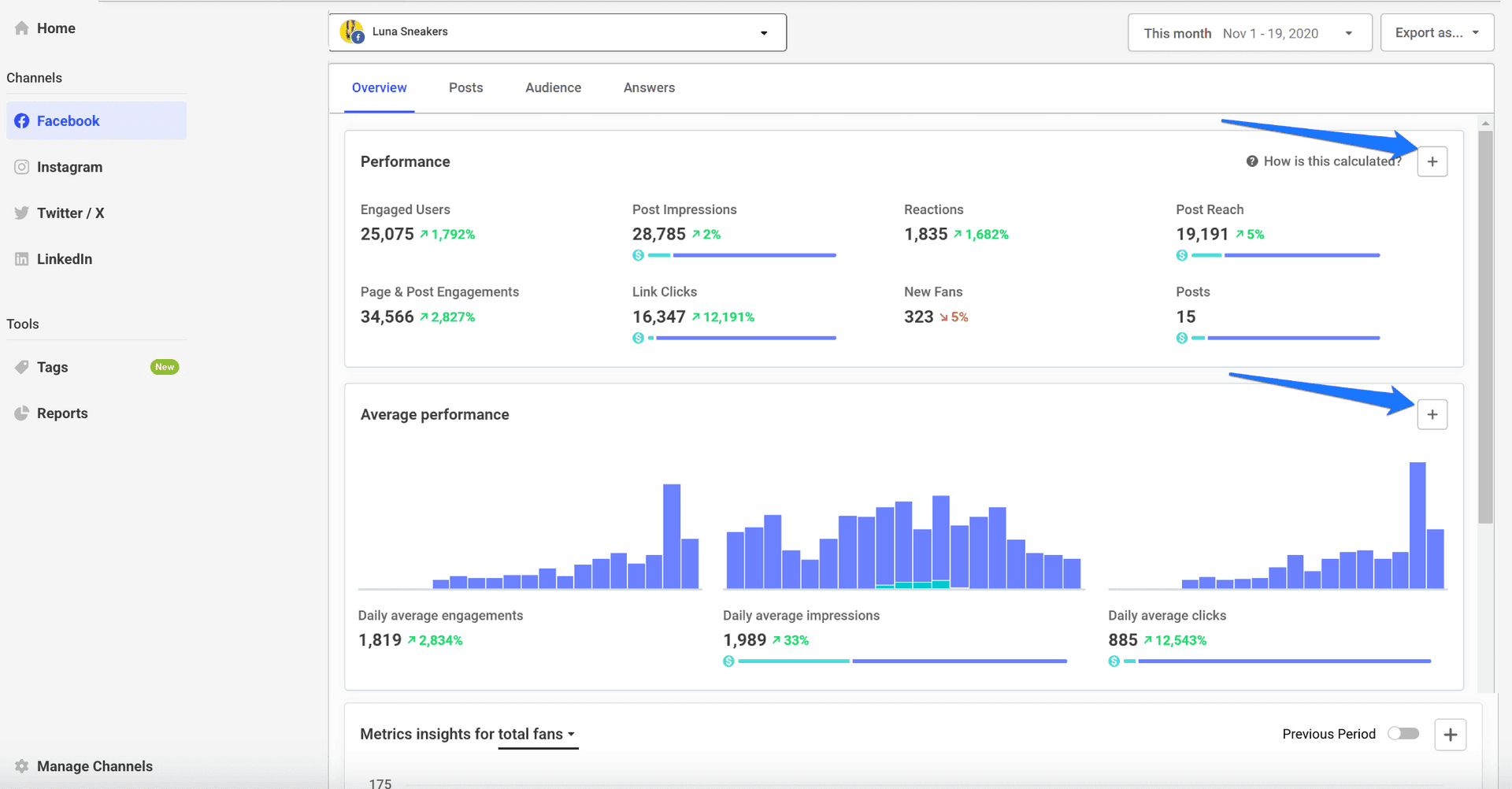
- Key features: Clean interface, post-level insights, story analytics, engagement rate tracking.
- Ideal for: Solopreneurs and startups.
- Pros: Affordable, easy to use, great for small operations.
- Cons: Limited multi-platform coverage.
tryCoM solves this by integrating both social and Google ecosystem analytics — giving marketers a unified dashboard that tracks performance from Facebook to Google Ads in one place.
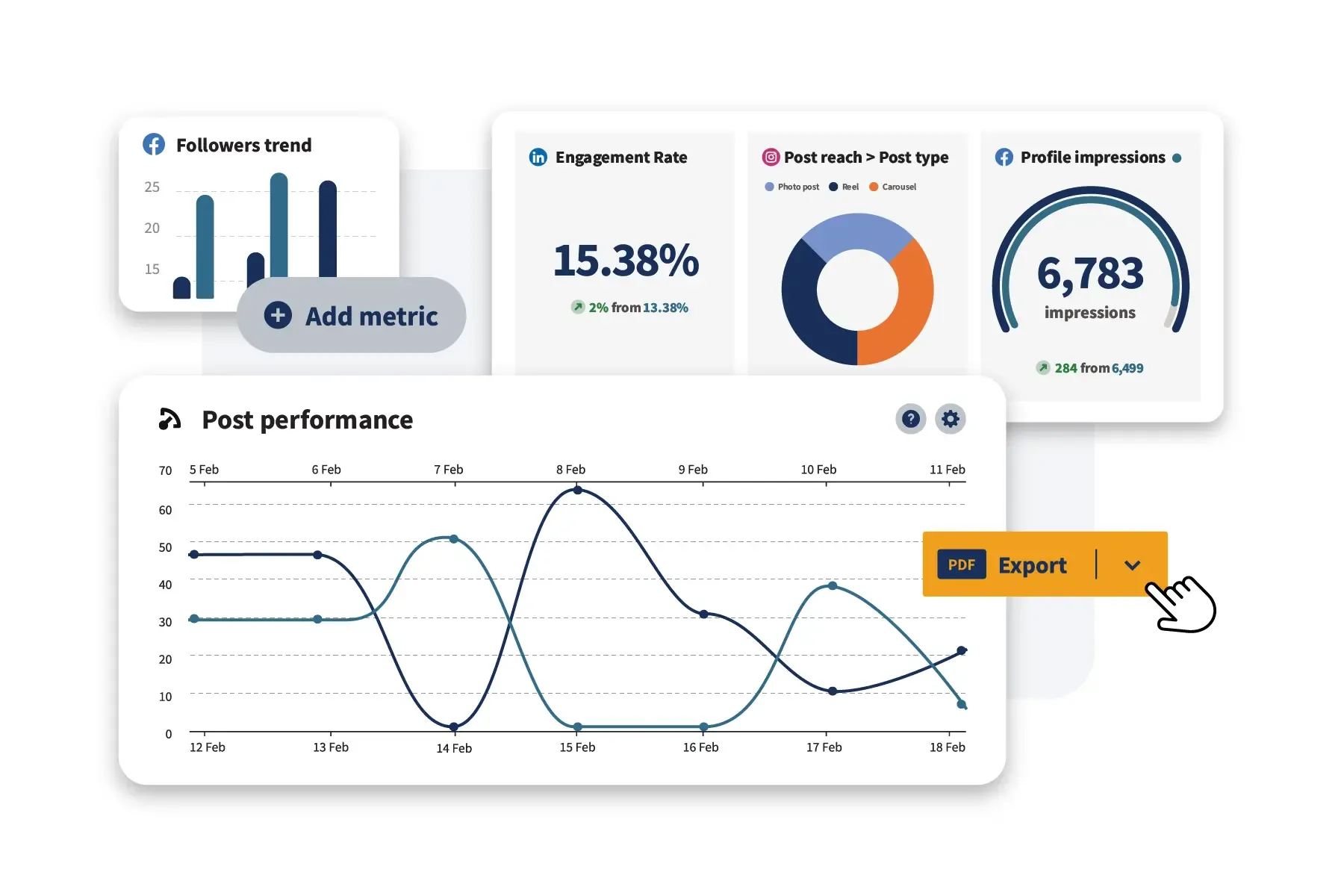
3. Hootsuite – Best for Enterprise-Grade Monitoring
- Key features: Team collaboration, advanced scheduling, cross-channel insights.
- Ideal for: Enterprises with large teams.
- Pros: Robust integrations, data export options.
- Cons: Complex interface for beginners.
tryCoM simplifies analytics with an intuitive, visual dashboard that combines deep insights with ease of use — perfect for marketers who want data clarity without complexity.
4. Rival IQ – Best for Competitive Analysis
- Key features: Compare up to 200 profiles, track engagement trends, and generate competitive reports.
- Ideal for: Agencies and brands needing constant competitive tracking.
- Pros: Detailed benchmarking and automated insights.
- Cons: Less emphasis on publishing.
tryCoM complements Rival IQ’s competitive insights by pairing analytics with full-funnel tracking — from social engagement to website conversions and Google Ads ROI.
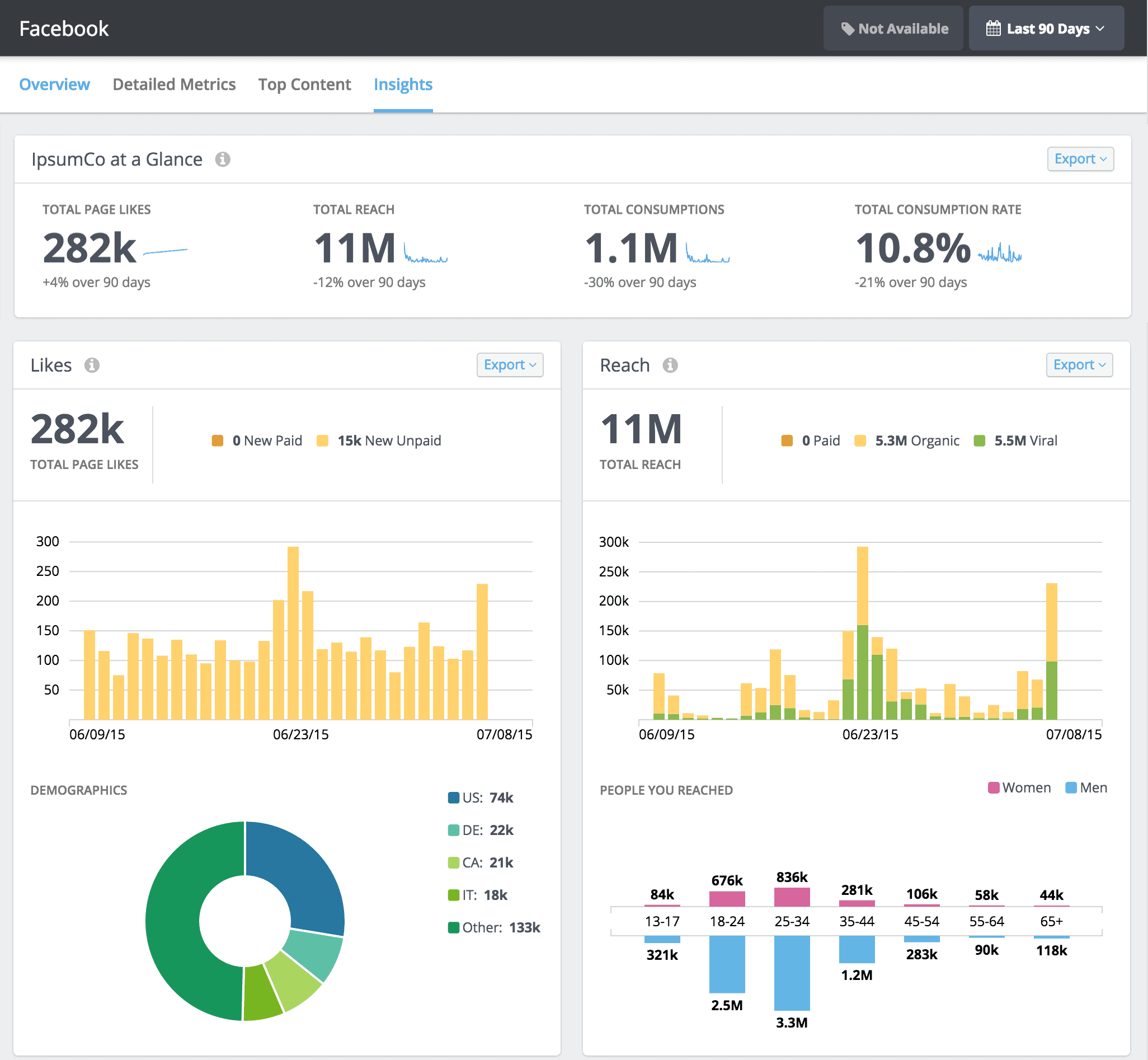
5. Keyhole – Best for Hashtag and Campaign Analytics
- Key features: Hashtag tracking, influencer analytics, sentiment insights.
- Ideal for: Event marketers and PR teams.
- Pros: Strong hashtag data.
- Cons: Focused primarily on campaign monitoring.
tryCoM goes beyond campaign tracking, connecting hashtag and engagement analytics to real business metrics like traffic, leads, and revenue.
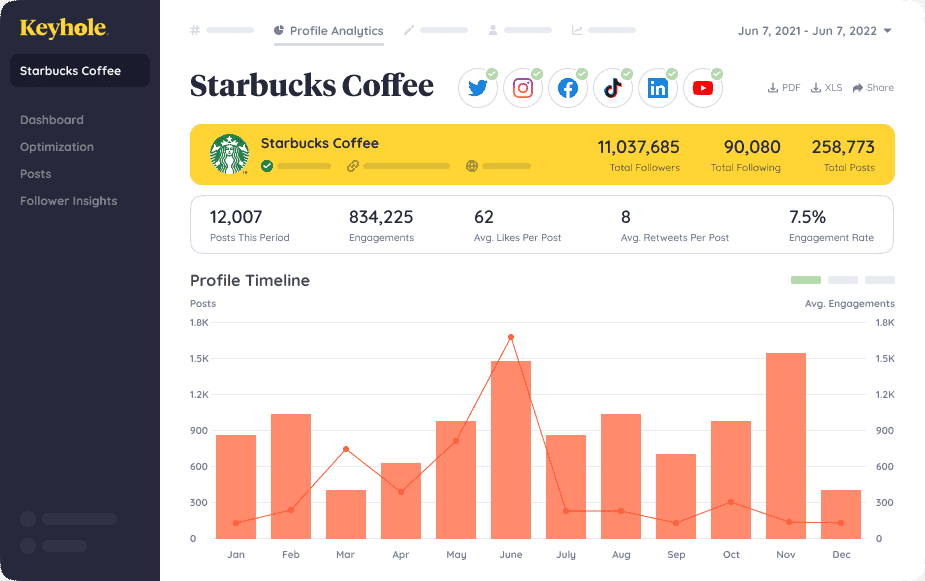
6. Brandwatch – Best for Social Listening and Sentiment
- Key feature: Advanced AI-powered social listening and sentiment analysis with predictive trend detection
- Ideal for: Enterprises managing brand reputation.
- Pros: Deep listening, demographic breakdowns, and predictive trend alerts.
- Cons: Steeper learning curve.
tryCoM provides a more accessible interface while still offering sentiment and performance insights across both social and Google channels — no steep learning required.
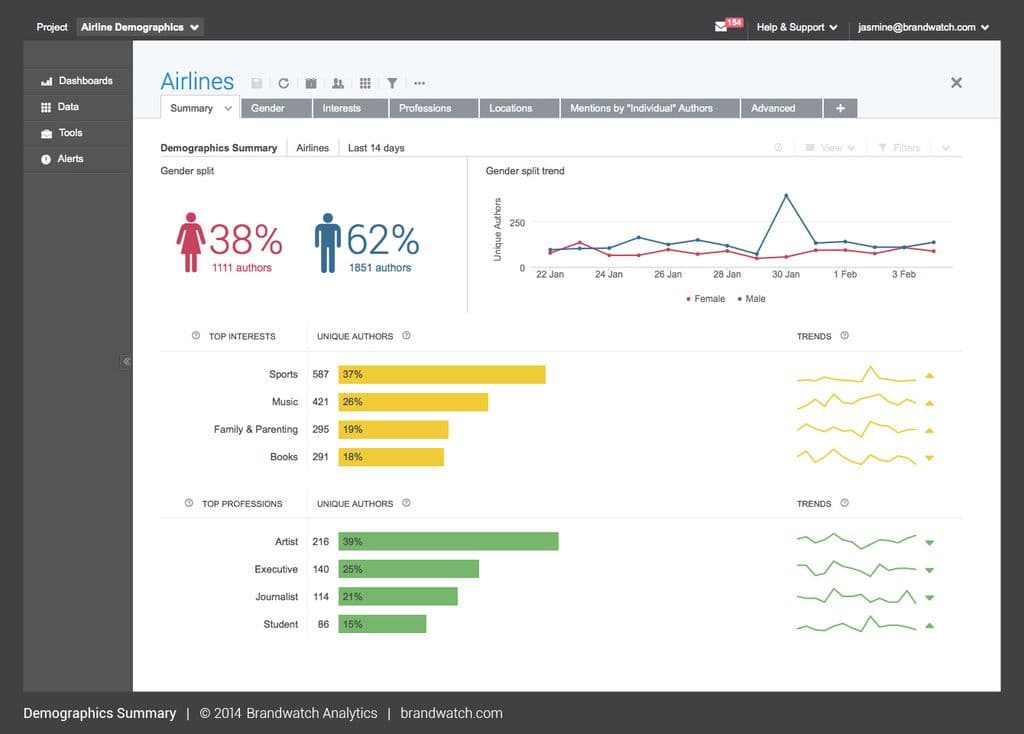
7. Socialinsider – Best for Multi-Platform Content Insights
- Key features: AI content scoring, post comparison, audience analysis.
- Ideal for: Agencies and data-driven marketers.
- Pros: Great competitor analysis; clean reports.
- Cons: Limited free tier.
tryCoM offers rich analytics and integrated reporting without complex pricing, giving small teams and agencies advanced data visibility at scale.
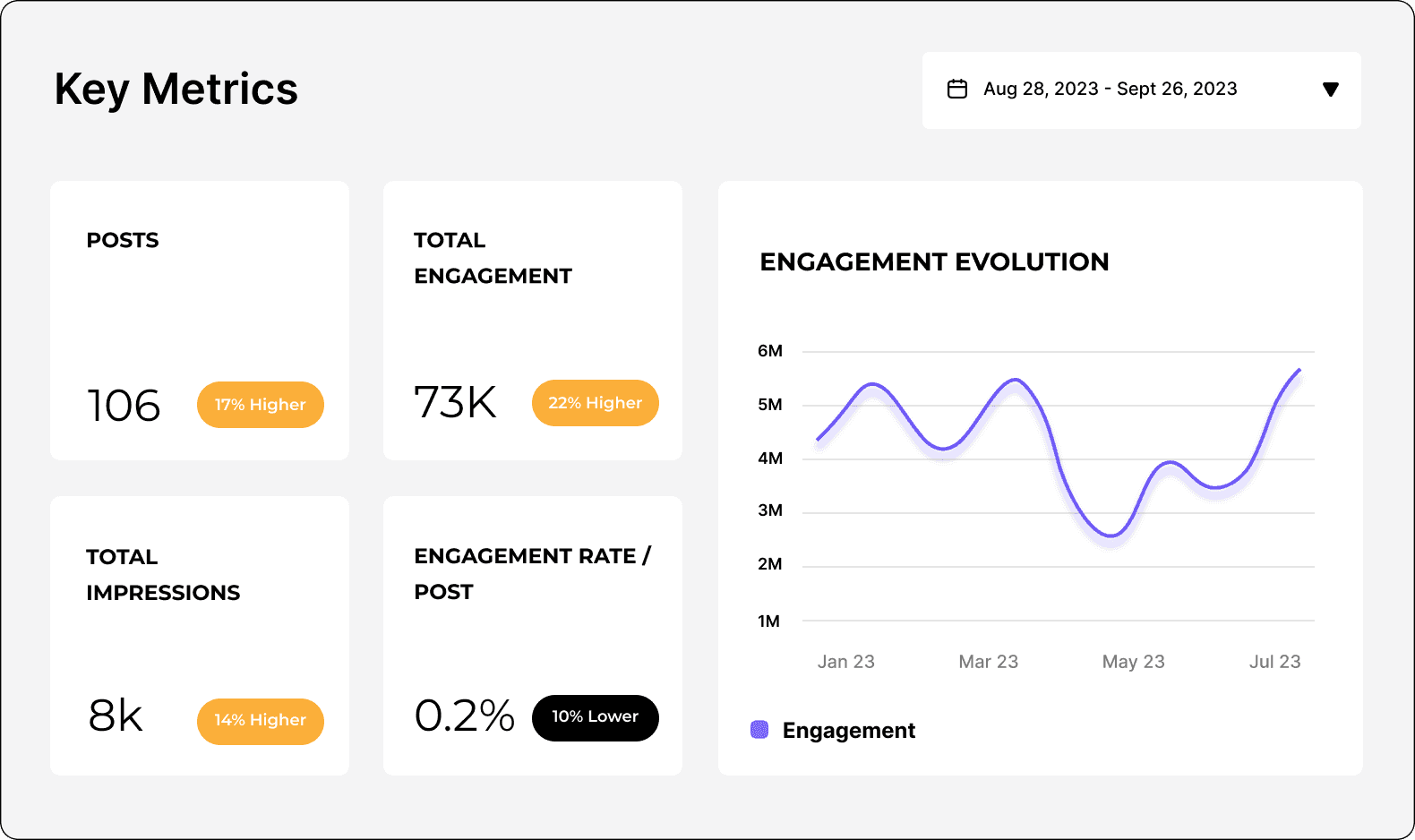
8. Iconosquare – Best for Instagram & Facebook Analytics
- Key features: Story tracking, engagement heatmaps, content optimization.
- Ideal for: Creators and e-commerce brands.
- Pros: Deep Instagram insights.
- Cons: Limited to fewer networks.
tryCoM eliminates this limitation by connecting Instagram and Facebook insights with Google Analytics, Ads, and LinkedIn data for a complete cross-channel view.
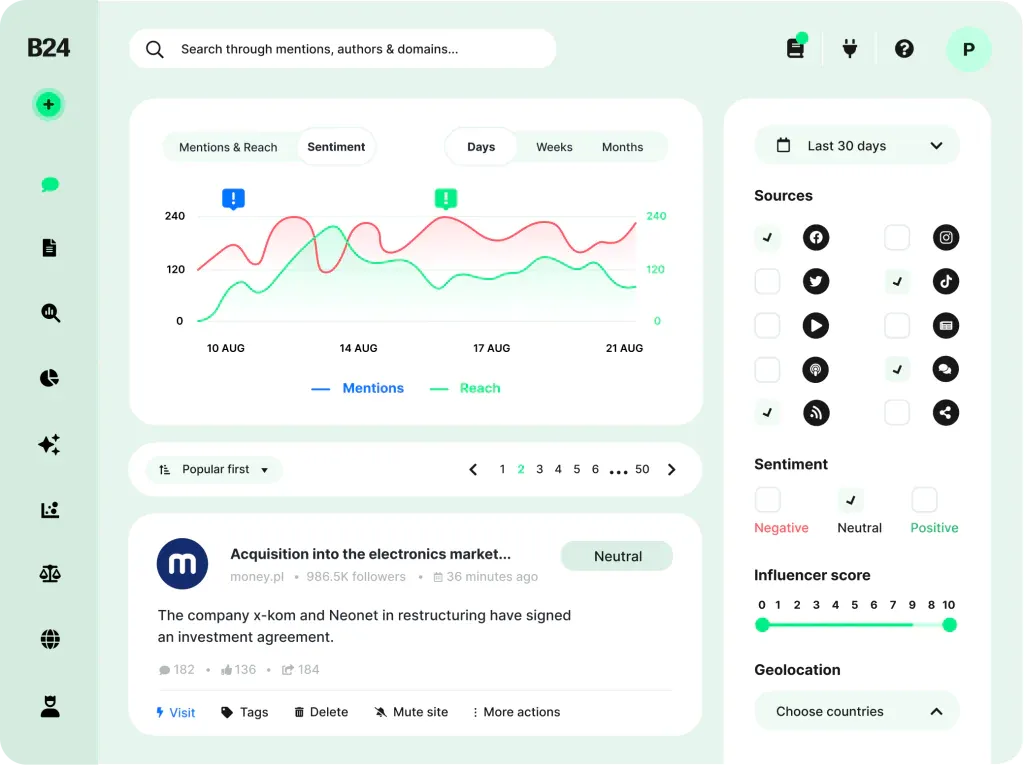
9. Brand24 – Best for Real-Time Social Listening and Mentions Tracking
- Key features: Sentiment analysis, mention tracking, keyword alerts, influencer identification.
- Ideal for: PR teams and reputation managers.
- Pros: Excellent real-time monitoring and sentiment insights.
- Cons: Limited historical data storage on lower plans.
tryCoM addresses this with long-term data archiving and trend visualization across social and Google metrics.
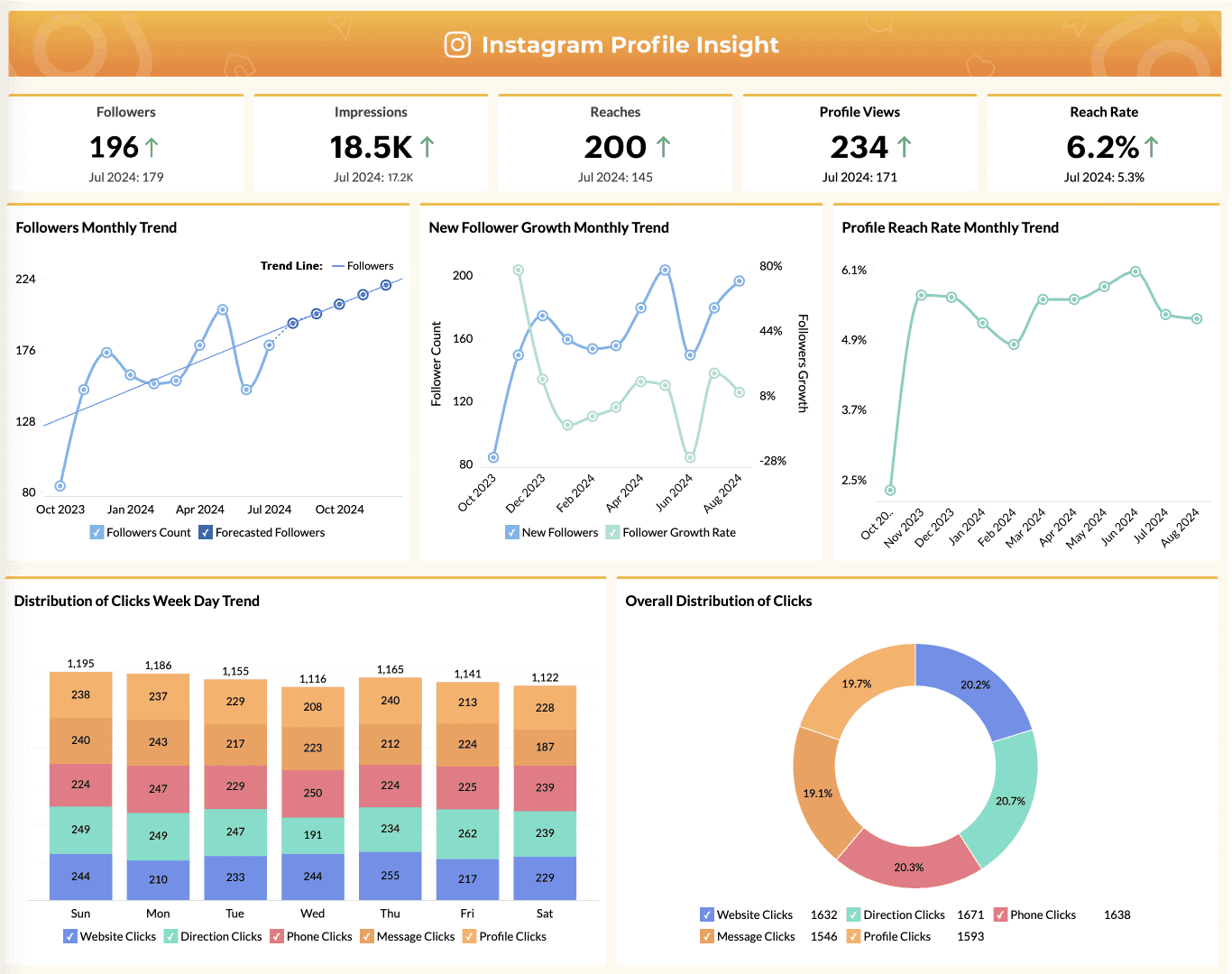
10. Zoho Social – Best for Agency Collaboration and Scheduling
- Key features: Content scheduling, engagement tracking, custom reports, team roles and approvals.
- Ideal for: Agencies and small-to-mid businesses.
- Pros: Smooth workflow collaboration and detailed scheduling tools.
- Cons: Analytics depth is basic compared to specialized tools.
tryCoM bridges that gap with advanced multi-channel reporting, predictive insights, and ROI tracking for both social and Google platforms.
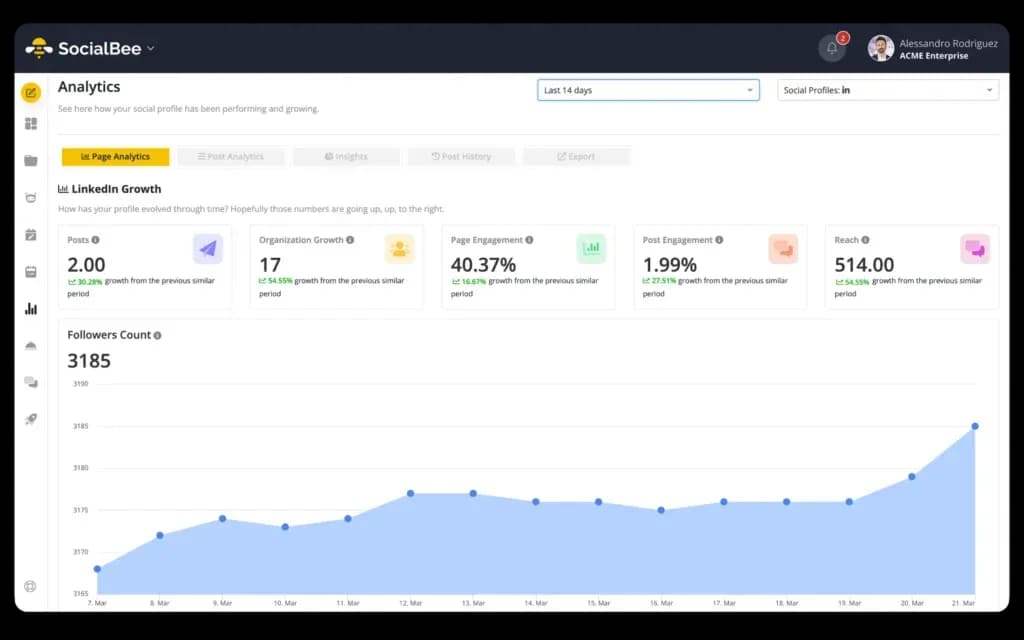
11. SocialBee – Best for Content Categorization and Evergreen Scheduling
- Key features: Category-based posting, evergreen content recycling, performance analytics, and post previews.
- Ideal for: Solo marketers and small teams seeking efficiency.
- Pros: Excellent for maintaining a balanced content mix.
- Cons: Limited competitor and advanced reporting insights.
tryCoM enhances these capabilities with detailed competitor benchmarking and cross-platform analytics that reveal content and campaign performance in depth.
12. Mentionlytics – Best for AI-Powered Brand Reputation Monitoring
- Key features: Multi-language monitoring, sentiment tracking, competitor listening, and automated insights.
- Ideal for: Brands focused on online reputation and customer sentiment.
- Pros: Powerful AI assistant for interpreting mentions and trends.
- Cons: Reporting interface can feel dated compared to newer tools.
tryCoM delivers a modern, real-time reporting experience with clean visual dashboards and dynamic insights across all integrated platforms.
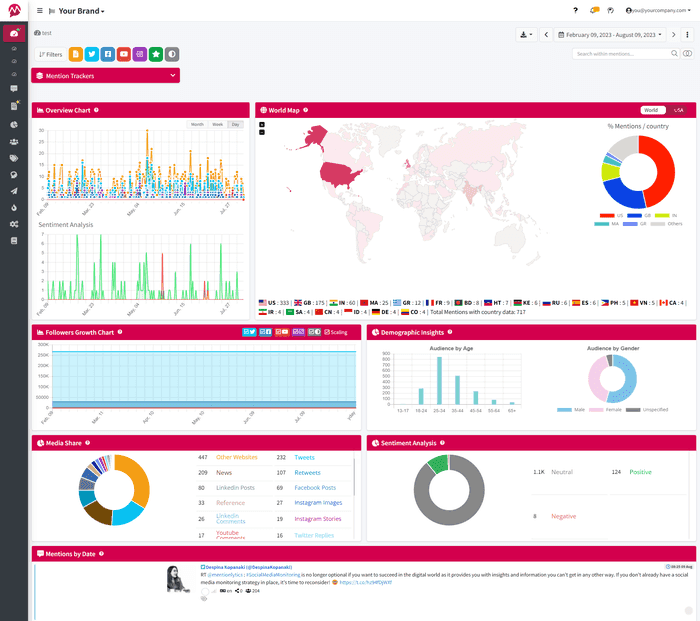
Every platform we’ve covered does an excellent job in its niche, but marketers often find themselves switching between tools to get a complete picture. tryCoM simplifies that by bringing all your social and Google analytics into one connected view.
tryCoM – Best for Agencies Wanting Unified Google + Social Analytics
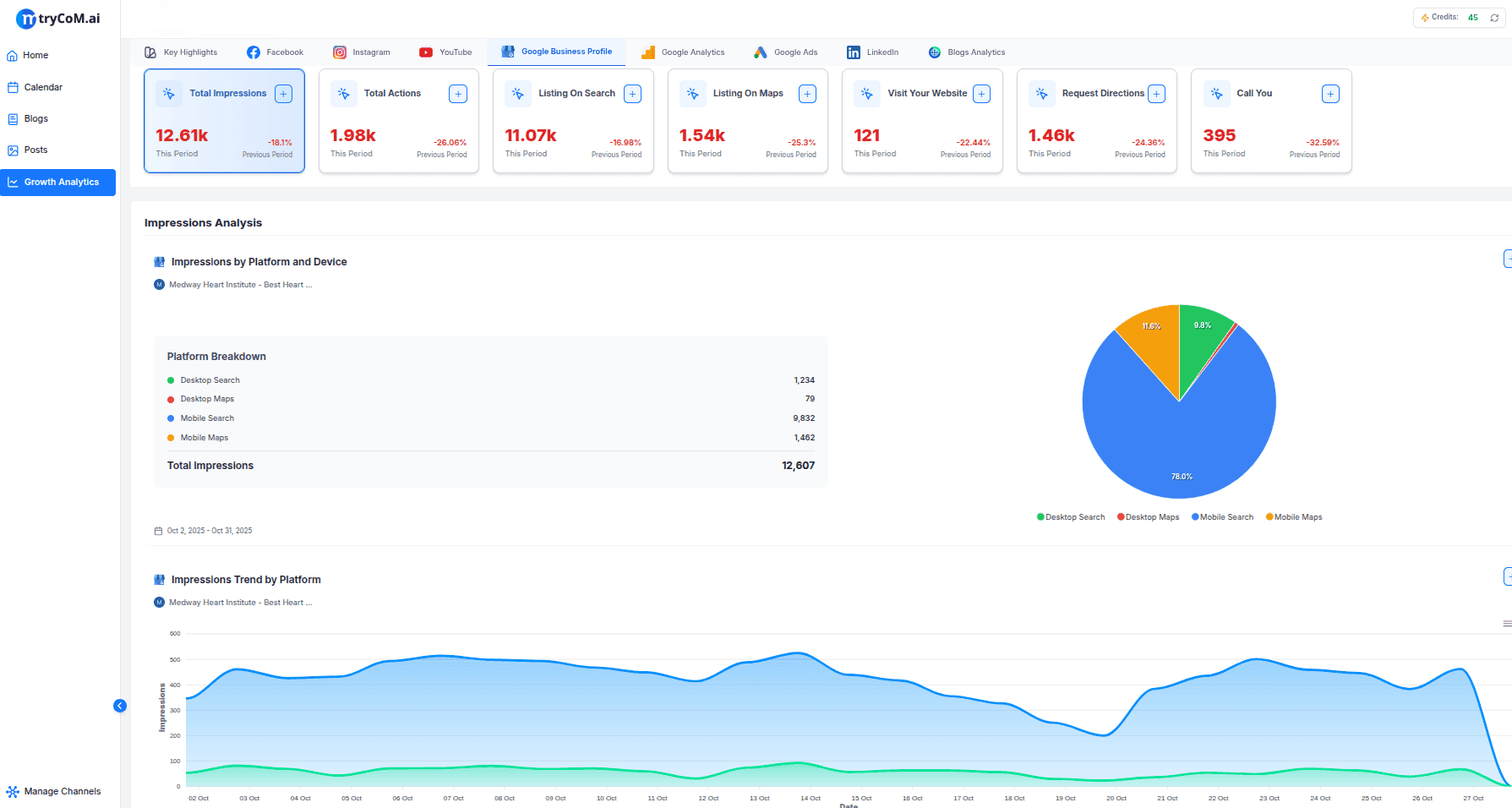
tryCoM combines multi-platform social analytics with Google’s native ecosystem, letting marketers connect Facebook, Instagram, LinkedIn, YouTube, and Google Ads/Analytics in one project.
Key strengths:
- Unified reporting across social + Google channels
- Audience, engagement, and conversion metrics in a single dashboard
- Built-in competitor benchmarking for Facebook & Instagram
- Detailed geographic, device, and month-wise performance views
Ideal for: Agencies managing clients’ full digital footprint
Unique edge: Tracks conversions from social clicks all the way to sales — closing the loop between social performance and website ROI.
How to choose the right tool
- Assess Team Size and Use Case
- Consider Budget and Features
- Evaluate Integration Needs
- Test UI and Ease of Use
- Check Reporting Options
Advanced analytics features to look for in 2025
AI-Powered Recommendations
Modern analytics tools like Sprout Social and Brandwatch use AI to analyze engagement patterns and audience behavior. They automatically suggest the best posting times, trending topics, and content formats that are most likely to boost reach and interaction — helping marketers plan smarter and faster.
Predictive Analytics
Predict future campaign performance or audience growth trends based on historical data. tryCoM’s cross-platform trend graphs (datawise, devicewise, and monthwise) already act as predictive indicators by visualizing engagement and conversion shifts over time.
Sentiment Analysis
Sentiment analysis helps brands understand audience emotions behind comments, mentions, and reviews. By tracking positive, negative, or neutral sentiment in real time, marketers can detect reputation risks early, respond proactively, and maintain a strong brand image online.
Frequently Asked Questions (FAQ)
1. What are the four types of social media analytics?
The four types are descriptive, diagnostic, predictive, and prescriptive analytics. Together, they help marketers understand what happened, why it happened, what will happen next, and what actions to take.
2. Do I need a paid tool?
If you manage multiple accounts, need automated reporting, or want deeper insights beyond native platform metrics, a paid tool offers scalability, advanced analytics, and integration features.
3. What are the 7 layers of social media analytics?
The seven layers include data identification, extraction, cleaning, integration, analysis, insight generation, and optimization — each layer refines raw data into actionable intelligence.
4. What are the 7 C’s of social media?
They are content, context, community, conversation, customization, consistency, and conversion — the core principles of building and maintaining meaningful engagement online.
5. What metrics should I track?
Focus on engagement rate, reach, CTR, conversions, ROI, and audience demographics to measure both performance and audience resonance effectively.
6. How do tools measure ROI?
Social analytics tools measure ROI by linking website traffic, conversions, and revenue directly with social media campaigns, helping you track what drives measurable growth.
7. What’s the difference between analytics and social listening?
Analytics measures how your own content performs, while social listening monitors brand mentions, keywords, and sentiment across the web to understand public perception.

Annamalai Kathir (AK)
Annamalai Kathir (https://www.linkedin.com/in/annamalai-kathirkamanathan/) - Marketing Analytics & AI MarTech Expert. As tryCoM's CEO, he has dedicated his career to building AI tools that simplify marketing and performance optimization for startups, enterprise, and agencies. With 10+ years of expertise in SaaS product marketing, digital marketing, social media analytics, SEO/GEO optimization, and competitive intelligence, Annamalai leads the team in developing AI-powered marketing software that delivers social media listening, content automation, competitor analysis, and unified ROI measurement to help businesses and agencies achieve data-driven growth and measurable outcomes. Connect: https://akathir.github.io/ | https://www.instagram.com/akathirk/ | https://x.com/kathirannamalai
View profile →More blogs by Annamalai Kathir (AK)

Top 10 Social media analytics and reporting Tools in 2025: Features, Pricing, and Comparison
A complete guide comparing the top 10 social media analytics tools of 2025 — features, pricing, pros & cons — and why tryCoM stands out as the ultimate all-in-one marketing analytics solution.
 Annamalai Kathir (AK)
How Often to Post on Every Social Media Platform in 2025: Complete Frequency Guide
This complete guide explains how often to post on every major social media platform in 2025, with clear frequency benchmarks for Instagram, Facebook, LinkedIn, TikTok, YouTube, Pinterest, X, and Threads. It helps brands and creators find the perfect posting rhythm to maximize reach, engagement, and growth. Plus, it shows how tools like tryCoM can automate content creation and posting for consistent results.
Annamalai Kathir (AK)
Social Media Engagement Rate - Formulas, Benchmarks & Strategies (2025)
This comprehensive guide explains what engagement rate is, why it matters, and how to measure it using accurate formulas across followers, reach, impressions, and views. It covers benchmarks, platform-wise engagement behavior, tools like tryCoM, and proven strategies to improve engagement in 2025. Perfect for marketers, creators, and businesses looking to understand and grow their social media performance.
Annamalai Kathir (AK)